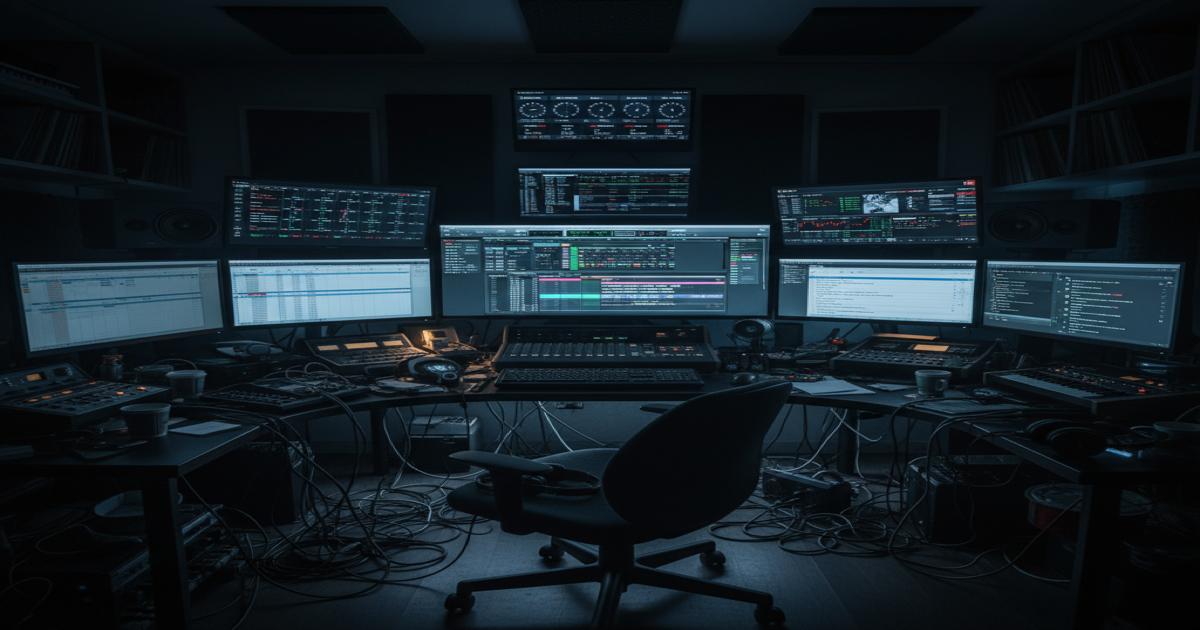
Fifteen Tools and a Spreadsheet
The average creative team uses ten to fifteen tools per project. Each one is fine individually. The problem is what happens at the boundaries, every handoff between tools requires a human being to manually carry context.
Two weeks. That's how long a budget discrepancy went unnoticed on a project I was involved with last year. The project management tool showed a total spend that was about twelve thousand dollars lower than the actual spreadsheet the finance team was maintaining. Nobody caught it because nobody was comparing the two, they each assumed the other was the source of truth. When the production manager finally reconciled them, it turned out three expense entries had been logged in the PM tool but never transferred to the finance spreadsheet, and two entries in the finance spreadsheet had been updated after the PM tool numbers were copied over.
Twelve thousand dollars of invisible budget variance. On a project with enough margin to absorb it, which is lucky, because on a tighter job that's the difference between profit and loss.
The stack everyone runs
Every production team I've worked with uses somewhere between ten and fifteen tools to deliver a single project. Monday.com or Asana for task management. A review platform for video feedback. Google Drive or Dropbox for file storage. Slack for real-time communication. Excel or Google Sheets for budgets. Email for everything that falls through the cracks of all the other tools. Maybe Bynder or another DAM for finished assets. Maybe a dedicated scheduling tool for resource allocation. Maybe a separate tool for timesheets.
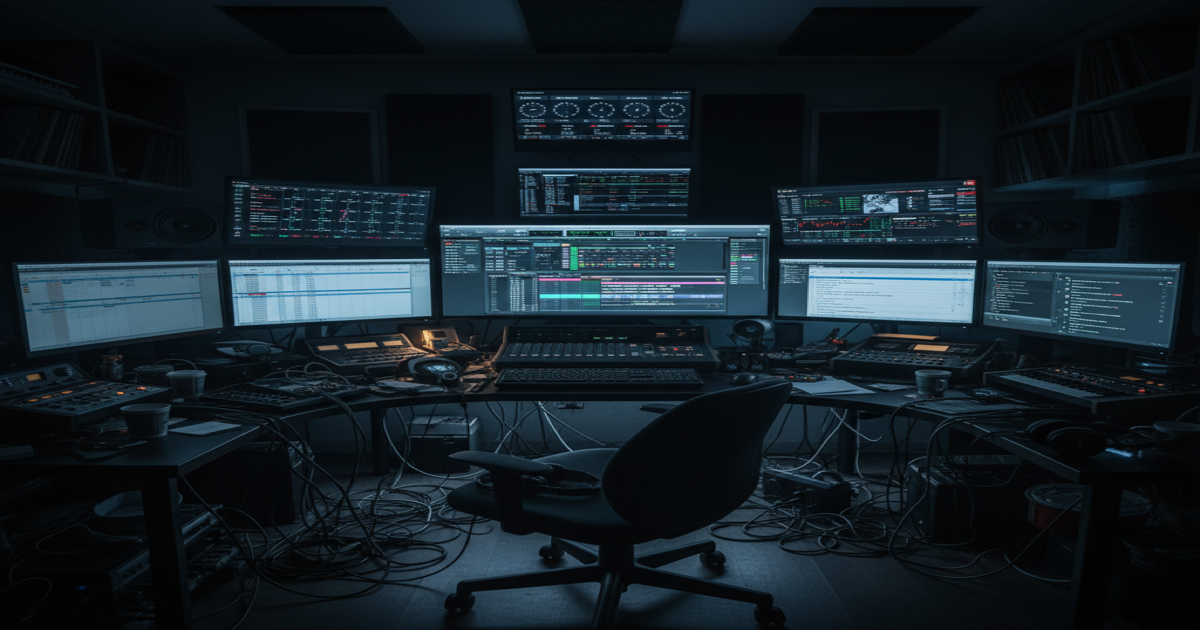
Each of these tools does its specific job adequately. Some do it well. Monday.com has a genuinely pleasant interface, I'll say that without reservation. Asana's timeline view is useful. The review tools have got genuinely good at what they do. The individual components are not the problem.
Every time work crosses from one tool to the next, someone has to manually carry the context. Copy the feedback from the review tool into a task in Monday.com. Update the budget spreadsheet to reflect the additional revision round. Upload the new version to Google Drive. Send a Slack message to the team. Send an email to the client. Send a follow-up email when the client doesn't respond to the first email.
The production DNA gap
General project management tools were built for general project management. Monday.com has no frame-accurate video review. Asana doesn't understand shot lists or script breakdowns. Wrike doesn't track equipment or crew availability. Airtable is a flexible database but not a project management tool, it requires heavy customisation and has record limits that become a problem for large asset libraries.
None of them understand the vocabulary of production. A "deliverable" in Asana is a generic milestone. In production, a deliverable is a specific output with a format, resolution, codec, aspect ratio, audio specification, and destination platform. A "resource" in Monday.com is a person assigned to a task. In production, a resource might be an edit suite that costs four hundred pounds an hour, a camera package that needs to be collected from a hire company at 6am, or a colourist who's only available between other bookings.
The per-user pricing compounds this. Most of these tools charge per seat per month. That works for a stable team of ten people. It doesn't work when you have four permanent staff and forty freelancers cycling through projects at different times, each needing access for days or weeks rather than months.
The hours it actually costs
I tracked my own team's time for a week last year and the context-switching overhead was somewhere around fifteen hours. That number felt high until I looked at the log. It's not dramatic, visible waste. It's the two minutes here, five minutes there, the tab-switching, the re-finding, the context-rebuilding that happens every time you move from one tool to another. Individually insignificant. Cumulatively, it's two full working days a week spent on the friction between tools rather than on the work itself.
I talk to agencies regularly, and most of them are actively shopping for something different, not because they enjoy software procurement but because what they have genuinely isn't working.
We've been building Telova as a single platform that covers the full lifecycle without requiring the duct tape between tools. Whether that ambition is achievable is something the market will decide, but the gap we're trying to fill is real and measurable.